Two jerseys, one World Cup / Dos camisetas, un Mundial - 5 minutos de español (English version) & Podcast

Hi! How are you? ¡Hola, qué tal!
Good morning, good afternoon, or good evening, depending on where you are or what time you’re listening.
Welcome to podcast 271. Thanks for being here.
And, I guess we’re talking about soccer again today, since the World Cup starts tomorrow and Mexico is kicking things off…
The first World Cup match will be tomorrow, Thursday, June 11, at 12:00 p.m. at the stadium in Mexico City—well, it’s always going to be the Azteca Stadium, even though it’s now called Estadio Banorte.
Listen to the podcast
And Mexico is facing South Africa. Who are you rooting for, Male?
Mexico, of course, although I have two jerseys….
Two teams? That sounds complicated.
A little bit. I was born in Montevideo, I live in Los Cabos, I teach Spanish to foreigners, and during the World Cup I have two teams to root for. When Uruguay plays, I’m sky blue; when Mexico plays, I’m tricolor; and when both play on the same day… no one can find me.
I get it. Besides, I’m in the same boat—I was born in La Paz.
In La Paz, Baja California Sur?
No, no. In La Paz, Uruguay.
Ah! So we have something in common. When people hear “La Paz,” they think of Sudcalifornia, but there’s another La Paz on the other side of the continent. And in almost every Latin American country.
And speaking of continents, travel, and soccer, today it’s hard to imagine what the first World Cups were like.
Very different. The first World Cup was in Uruguay, in 1930. There was no TV, no Internet, no social media, and it wasn’t even easy to travel. Just radio…
 |
| Poster del primer Mundial en el Estadio Centenario, Montevideo |
Many games were followed on the radio. And when television arrived, for many years people watched recorded games or heard the news hours later.
Today we see a goal on our phones seconds after it happens. Back then, for many people, the World Cup was a voice coming through the radio, and sometimes on shortwave.
And Uruguay has a special relationship with World Cup history.
Of course. The first World Cup was held there; Uruguay won that first World Cup in 1930 and won again in 1950 in one of the biggest upsets in soccer history.
The famous Maracanazo.
Exactly. Brazil hosted the 1950 World Cup, and the final match was Brazil versus Uruguay in Rio de Janeiro.
Brazil only needed a draw to be crowned champion.
More than 170,000 people packed the Maracanã Stadium. The vast majority were Brazilians. Very few Uruguayans were able to make the trip. Back then, traveling was expensive, slow, and complicated.
Brazil started off winning, and it looked like the party was on.
But. Uruguay tied the game, and then came one of the most famous goals in history.
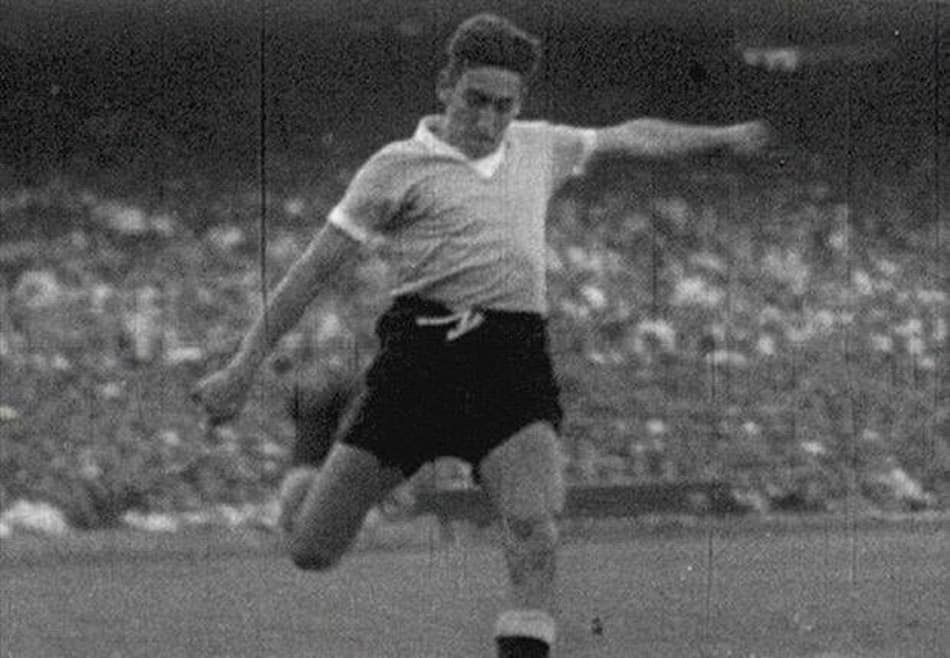
The one by Alcides Ghiggia.
Yes. Ghiggia advanced down the right and scored the 2-1 goal for Uruguay.
And that’s where a legendary phrase was born.
Years later, Ghiggia said:
“Only three people have silenced the Maracanã: Frank Sinatra, the Pope, and me.”
I love that quote.
Me too. They say the silence in the stadium was impressive.
The defeat was so crushing that many people cried. Over time, stories and legends emerged about extreme reactions in some cases, but the truth is that it was a massive emotional blow for Brazil.
Meanwhile, the Uruguayan players stayed in the locker room for hours. The atmosphere was so intense that they were afraid to come out… In Montevideo, the capital of Uruguay, everyone took to the streets… my dad told me about the excitement they felt—something truly special.
The hero of that afternoon was Ghiggia.
Yes, although his life afterward wasn’t that of a modern superstar. Soccer back then was very different.
There were no multimillion-dollar contracts, giant sponsors, or social media—or corruption… in short…
Patrocinadores Sponsors
Many players we now consider legends lived very simply. Ghiggia went through difficult financial times, and although he was recognized by history, he never had the celebrity lifestyle that many current soccer players enjoy.
Soccer was less commercial.
Much less so. Players played for pride, for passion, and for the love of the jersey.
And speaking of jerseys, you have two.
Yes. Uruguay: the first world champion.
And Mexico: one of the countries most closely associated with the World Cup festivities.
In addition to hosting three World Cups. The Azteca is the only stadium in the world to have hosted three World Cups.
Anfitrión- Host
So you’re wearing two jerseys with a lot of history.
Exactly. And as long as they don't face each other, I can cheer for both teams' goals without feeling like I'm betraying either one.
Ambos. Both
What if there were a Uruguay-Mexico final?
I think you’d find me in Los Cabos wearing a shirt that’s half sky blue and half green, white, and red, suffering through the entire ninety minutes.
And after the game...
After the match, I’d still be celebrating the fact that soccer lets us travel through history, learn Spanish, and remember that, before screens and social media, millions of people would gather around a radio to dream of a World Cup.
And that, more than ninety years later, remains a story for many countries.
And a business for a few… Let’s get to the important stuff. And you, how many jerseys do you have? Who are you rooting for in this World Cup? Where are you going to watch the games?
Thanks for being here and listening.
See you later. Nos vemos pronto
Bye, bye Chau, chau

Do you wantt to practice your Spanish? Click here for your free lesson


Comentarios
Publicar un comentario