Spanish at the traditional San José del Cabo festivities - There are a lot of people! English version + Podcast
Good morning, good afternoon, or good evening, depending on where you are or what time you're listening.
Welcome! We're Spanish in Cabo, your home for Spanish in Los Cabos.
In these 5 minutes of Spanish, we're going to talk about a very short but very common word: gente (people).
Listen to the podcast
And today we're going to talk about this word because these days there are so many people in the streets here in San José del Cabo.
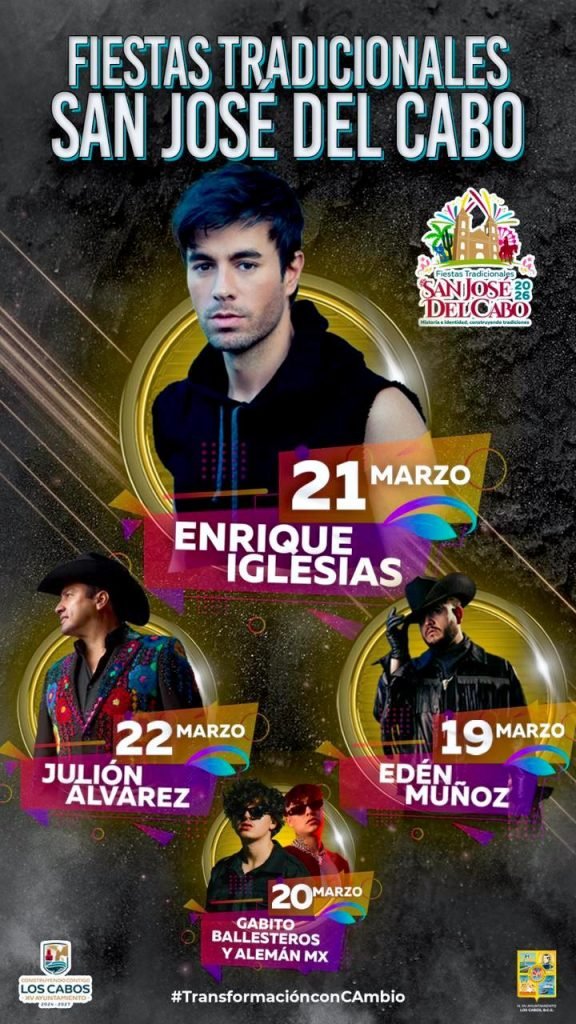
Oh, of course! We're celebrating Saint Joseph's Day, the town's patron saint, and like every year, there's a whole week of traditional festivities, cultural activities, food vendors, crafts, parades, and lots of musical performances.
That's why we see so many people in the plaza, on the streets, and downtown.
Of course, when there's a party… there are people.
Gente significa people,
Santo patrono-patron saint
The word "gente" comes from the Latin "gens, gentis," which meant a group of people with the same origin, such as a family, a clan, or a people.
Over time, in Spanish, "gente" began to be used to refer to people in general, but always as a collective noun.
In Spanish, "gente" is singular, even though it refers to many people.
In English, however, "people" is plural.
People in English is plural, but gente in Spanish is singular.
La gente está en la plaza. / People are in the square.
Siempre usamos el verbo en singular:
La gente es…
La gente está…
La gente quiere saber de qué se trata…. como en la Revolución de 1810….
Pero esta palabra tiene más historia. But this word has more history...
De la misma raíz viene gentil en español y gentle en inglés.
Gentle → amable
Gentil → cortés, educado
Gentileza → kindness
La gente aquí es muy gentil. / People here are very kind.
because there are so many people, so much noise, and so many emotions.
So many cars everywhere…and traffic…
And speaking of people… Do you remember the Viva la Gente organization, which started in Denver in the 70s?
Viva la Gente in English: Up With People, a non-profit organization that sought world peace.
World peace, so necessary these days…
Yes, really. Many young people stayed with families and sang in various countries, right?
Did you see them live? Well, this shows your age…they traveled all over Latin America. In fact, there's a newsletter subscriber who sang with this group. Congratulations!
But now, at the San José del Cabo festival, Viva la Gente won't be there…
This year, other very famous artists will be performing.
For example, "Los Enanitos Verdes", the very good Argentine rock group.
Enanitos- enanos- dwarfs

That's why there are so many people in the streets.
People want to see the concerts, people want to eat at the food stalls, people want to celebrate.
Traditional festivals always bring people together.
People come with family, with friends, with tourists, with neighbors.
And when we see all of that, we can say:
Long live the people!
Long live the festival!
And long live San José del Cabo!
We want to, see you in class, in the cooking workshops, in our SpanishUP2U Club Zoom classes, or walking among the people at the San José festivals.
Thanks for listening and sharing.
Until the next episode.
Bye, bye.


Comentarios
Publicar un comentario