"No des pisada sin huarache" / “Don’t take a step without a huarache”Don’t make a move without knowing what’s in it for you.- 5 minutes of Spanish (English version) + Podcast
Hi! How are you? ¡Hola! ¿Qué tal?
Good morning, good afternoon, or good evening, depending on where you are or what time you’re listening.
Audio
Welcome to podcast 282. Nice number—we’re repeating the 2, 2, 8, 2. Thanks for being here. What are we talking about today?
Today we’re going to learn a very Mexican saying:

“No da pisada sin huarache.”
No da pisada sin huarache. It’s used a lot—it’s an everyday saying—but it sounds so strange!
Yes, if you take it literally, it sounds like we’re talking about someone who can’t walk without their sandals or huaraches.
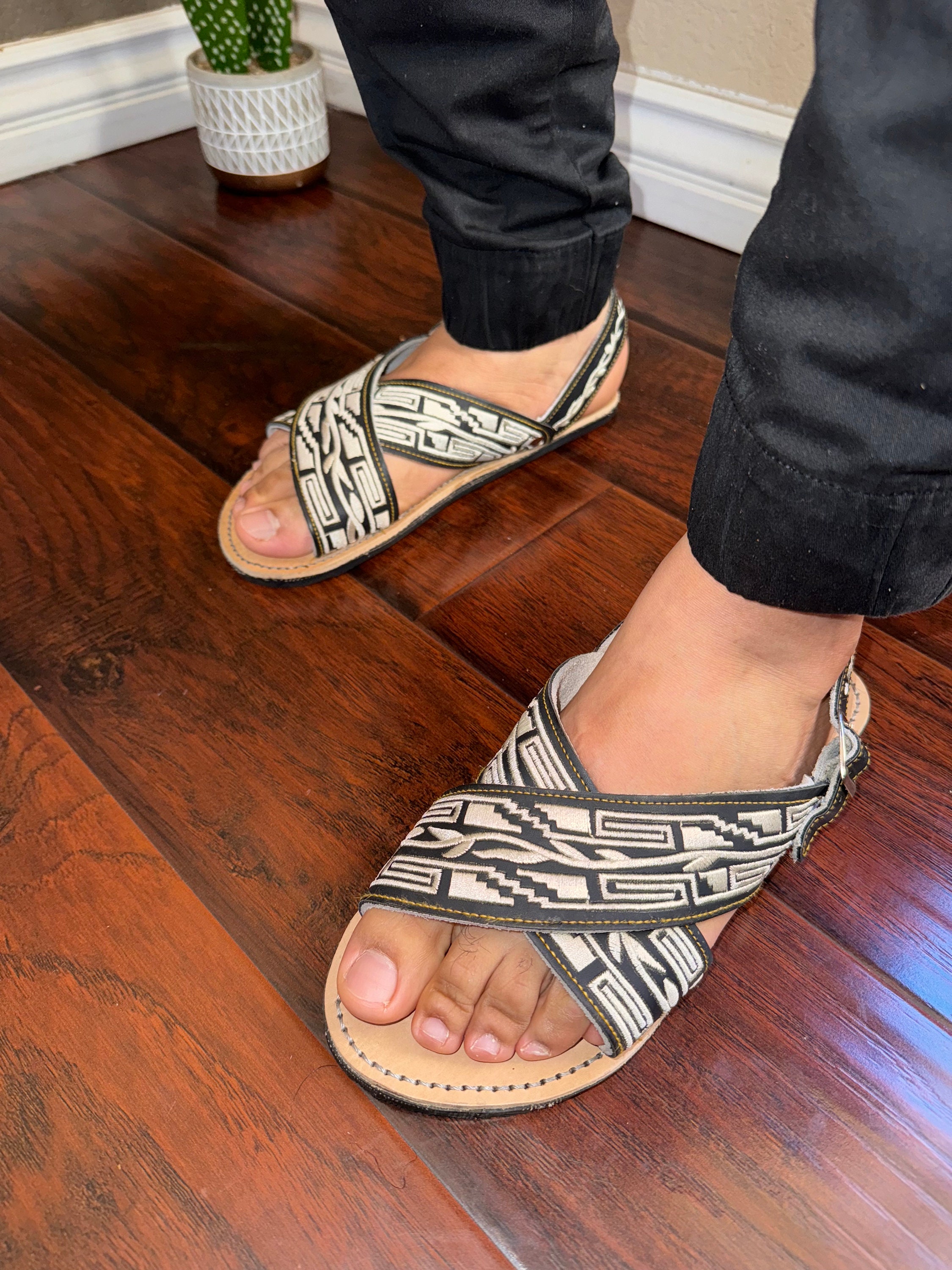 |
| Huaraches |
So, what does it really mean?
It refers to a person who doesn’t do anything without a reason, an advantage, or some benefit. It’s someone who thinks before acting and who usually doesn’t take a step without knowing what they can gain from that action.
Ah, so it’s not always a negative thing.
It can have a positive or negative connotation, or it can simply describe a very cautious and calculating person. But let’s start with the word “pisada.” It comes from the verb “pisar.” “Pisar” means to put your foot on something.
En inglés, to step on o to tread on, dependiendo del
contexto ¿Y pisada?
A footprint is the act of stepping on something or the mark left by a foot.En inglés puede ser step o footprint, dependiendo de la situación.
En inglés puede ser step o footprint, dependiendo de
la situación. Depending on the situation,
“Ten cuidado con la pisada” o “Dejó una pisada en la
arena”.
He left
a footprint in the sand.
Sure. And here’s another very interesting word: huella.
Are “pisada” and “huella” the same thing?
Not exactly. A “pisada” specifically refers to the mark left by a foot or a shoe. “Huella” is more general. It can be the mark of a foot, but it can also be the mark left by an animal, a wheel, or even a person in a figurative sense.
For example: “The dog left its huellas in the sand.”

In English, “huella” can be “footprint,” “track,” “mark,” or “trace,” depending on the context.
And can we also use “huella” in a more abstract way?
Yes. For example: “His work left an important mark on the community.”
His work left an important mark on the community.
Obviously. Here we’re not talking about a physical mark. We’re talking about an influence or an effect that lingers.
Very interesting. And what does all this have to do with the huarache?
The huarache is a traditional Mexican sandal. Its origins date back to pre-Hispanic times, and it has traditionally been made from leather straps, although there are different styles and materials depending on the region.
So the huarache is a type of footwear.
Yes. And it’s a word closely tied to Mexican culture.
And why does the saying go, “Don’t take a step without a huarache”?
The image is very simple. Imagine a person walking. Every time they take a step, they’re wearing a huarache. That’s where the idea comes from—that you don’t take a step without having something to back you up or without seeking some benefit.
So “no dar pisada sin huarache” is like saying “don’t take a misstep.”
La forma tradicional es “no dar pisada sin huarache”.
Como usamos muchos dichos, podemos cambiar el sujeto y el tiempo verbal. Por
ejemplo: “Mi hermano no da pisada sin huarache”. “Ayer no dio pisada sin
huarache”. “Nunca da pisada sin huarache”.
Pisar es el verbo. Pisada es el sustantivo. Y huella
es una palabra relacionada, pero más amplia.
The traditional form is “don’t take a step without a huarache.” Since we use many sayings, we can change the subject and the verb tense. For example: “My brother doesn’t take a step without a huarache.” “Yesterday he didn’t take a step without a huarache.” “He never takes a step without a huarache.”
“Pisar” is the verb. “Pisada” is the noun. And “huella” is a related word, but with a broader meaning.
Pisadas o huellas
Important words
Pisar: to
step on.
—Pisada: step o footprint, según el contexto.
—Huella: footprint, track, mark o trace.
Huarache: a traditional Mexican sandal.
—And the saying: “No da pisada sin huarache.”
Which we can interpret as: “He doesn’t do anything without a reason or without seeking some benefit.”
I like it because it’s a very vivid saying.
Yes. And now, when you hear someone say “No da pisada sin huarache,” you’ll know they’re probably talking about someone who thinks before acting and who doesn’t take a step without having something in mind.
And who knows… maybe you’re one of those people who doesn’t take a step without a huarache, either.
But we’ll leave that up to your interpretation.
Thanks for sticking with us this far on the podcast.
See you at the online workshops or here in Los Cabos.
Or we’ll catch up next Wednesday.
See you soon.
Bye, bye.


Traveling by road is a practical way to explore different cities, discover local culture, and enjoy scenic routes. Choosing a Mexico bus service can help travelers plan their journeys between destinations while comparing schedules and available travel options.
ResponderEliminar